When Waiting Isn’t an Option
When reference labs couldn’t keep pace with demand, Westover Hills Women’s Health built a scalable diagnostics program
When patients are waiting for answers about a possible sexually transmitted infection (STI) or vaginal infection, every day matters.
Delayed results can postpone treatment, increase patient anxiety and create additional work for clinical staff, making fast, reliable diagnostics a growing priority for women’s healthcare practices. For Westover Hills Women’s Health, the search for a better approach led to a significant shift in how the organization manages STI tests and other diagnostic testing.
Learn how Westover Hills Women’s Health worked with Medline to implement point-of-care STI testing, helping to improve turnaround times, increase testing capacity and support practice growth across three locations.
How to address the limitations of sending STI tests to reference labs
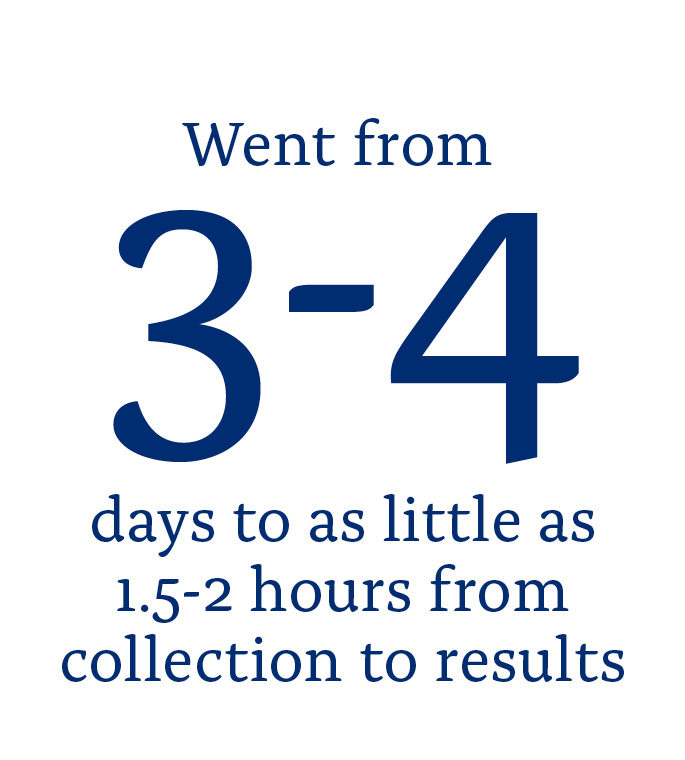
As the organization’s testing volumes increased, Westover Hills leaders began evaluating whether continuing to send samples to a reference laboratory made sense for the organization. The practice routinely sent swabs for STI and vaginal infection testing to an outside lab. Results typically took three to four days to return, creating delays for both staff and patients.
“We sent out so many test swabs that we ultimately realized we should process them ourselves,” says Hael Makki, office manager for Westover Hills Women’s Health.
The delays created several challenges:
- Results often took three to four days to return from the reference lab
- Patients waited longer to receive answers and begin treatment
- Staff spent more time managing follow-up communications
- The practice missed revenue opportunities associated with in-house testing
- Growing testing volumes increased reliance on an external provider
The organization knew there was an opportunity to improve turnaround times while creating a more efficient model for diagnostic testing.
Daniel Kelly, Medline sales representative – non-acute care, had seen firsthand how much testing volume Westover was sending to outside laboratories.
“Westover already had the patient volume to support point-of-care testing,” he says. “The opportunity was to help them build a program that could deliver faster results while supporting both their clinical and operational goals.”
Building a scalable point-of-care STI testing program
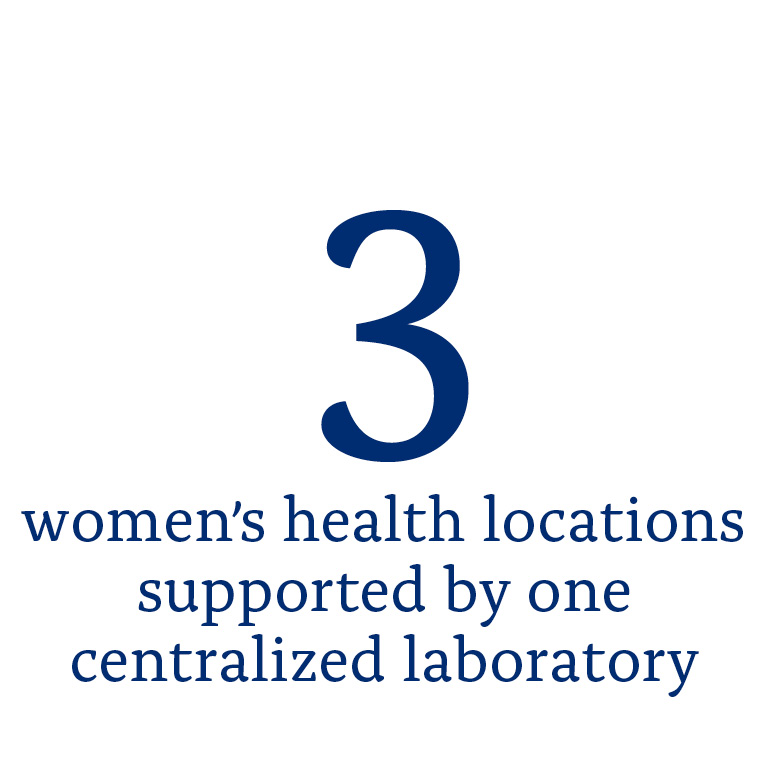
Westover Hills partnered with Medline and Cepheid to bring diagnostic testing in-house, focusing first on the high-volume sexual health tests most relevant to the practice’s patient population. The goal was not simply to replace send-out testing, but to build a sustainable program that could support future growth across all three locations.
Implement testing in phases
The team initially implemented:
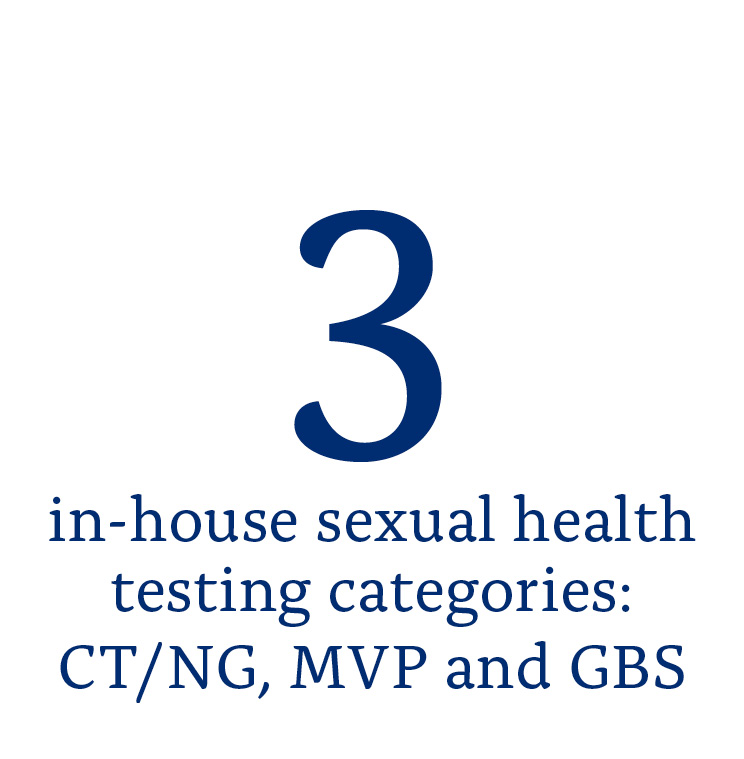
- CT/NG testing for Chlamydia trachomatis and Neisseria gonorrhoeae
- Multiplex vaginal panel (MVP) testing for common vaginal infections, including bacterial vaginosis, yeast infections and trichomoniasis
Rather than converting all testing at once, Westover rolled out the program gradually to validate workflows, monitor reimbursement and ensure staff could comfortably manage the increased testing volume.
“We started implementing the tests little by little,” says Makki. “We were doing about 10 per day at the start, then within a week we started doing 10 per office, and the following week we reached 100%.”
According to Kelly, the phased approach helped the practice establish a strong foundation before expanding. “They were very intentional about the rollout,” he says. “The team started with high-volume testing categories, validated the workflow and then scaled quickly once they saw the clinical and operational benefits.”
As leadership and staff confidence in the program grew, so did the practice’s testing capabilities. A few months later, Westover added Group B Streptococcus (GBS) testing, further expanding the services available to patients.
“Many physician practices already have the patient volume to support in-house testing. The key is identifying the right place to start and working with experienced partners to build a responsible program that can grow over time.”
—Josh Carter, Senior Vice President of Physician Office Sales, Medline
Equip staff for success
Successfully bringing testing in-house required staff training, reliable inventory and responsive support to keep operations running smoothly. Per Makki, Medline’s consistency and service have been critical as testing volumes increased.
“Anytime we’ve had an issue, they’ve resolved it quickly,” he says. “If we had damaged cartridges, they would replace those in a timely manner.”
When Westover launched GBS testing, Medline and Cepheid provided hands-on training to help staff quickly adopt the new workflow.
“They sent a Cepheid rep to show us exactly how to run it,” says Brianna Jackson, medical assistant and lab technician at Westover Hills. “She spent a few hours here that day to train us and make sure that we felt knowledgeable.”
The support continued after implementation, helping give staff confidence that expert guidance was available whenever questions arose.
“The opportunity was to help them build a program that could deliver faster results while supporting both their clinical and operational goals.”
—Daniel Kelly, Sales Representative–Non-Acute Care, Medline
Expand capacity to meet demand
The success of the testing program quickly created a new challenge: keeping pace with growing demand. Westover initially operated a single Cepheid GeneXpert® 16-bay system. As testing volumes increased, laboratory staff began pushing the system to its limits.
At one point, delayed cartridge shipments created a backlog while sample collection continued at full volume. “We realized that with the number of swabs we were collecting, there was no way we were going to be able to catch up,” Makki says.
The practice added a second 16-bay system at its centralized laboratory location, which supports all three clinics. “When we were only running one, we were running about 50 tests a day,” says Jackson.
Makki says that the two analyzers helped them catch up in no time. “We realized that with two analyzers, we could run the swabs the same day, get results within the next two hours and output results very quickly.”
Refine operations for greater efficiency
As testing volumes continued to grow, Westover worked closely with Medline not only to maintain supply levels, but also to identify opportunities to streamline laboratory supply and reduce unnecessary work for staff.
One lesson learned was the importance of ordering supplies further in advance.
“Trying to order supplies on Thursday or Friday for the following week doesn’t work,” says Makki. “Now I order a week ahead. When we get the supplies, we don’t need them right away, but they’re available.”
The team also implemented Medline’s lot sequester service, which reserves inventory from a specific lot number. The approach helps simplify quality-control processes and reduce the need for recalibration when inventory batches changed.
“When you’re getting inventory of all the same lot number, it reduces the amount of time we need to spend on quality control,” says Makki. “Before, we used to do it once or twice a week. Now we conduct it once or twice a month.”
Reducing the frequency of quality-control checks has freed up staff time while helping maintain consistent testing operations.
“We realized that with two analyzers, we could run the swabs the same day, get results within the next two hours and output results very quickly.”
—Hael Makki, Office Manager, Westover Hills Women’s Health
Accelerate patient care while supporting operational growth
Bringing diagnostic testing in-house delivered benefits across the practice, from faster patient care to increased testing capacity and stronger financial performance. While the practice previously waited three to four days for results from a reference laboratory, in-house testing allows staff to review results much sooner and begin the next steps in care more quickly.
“The test results come back a lot quicker and are reviewed by the nurses,” says Jackson, “That shortened our patients’ waiting time for results.”
Improve access to timely treatment
For patients with positive results, faster diagnosis has translated into faster intervention. “We’re able to start treatment much faster than when we were using reference labs,” says Jackson.
The difference is especially noticeable when coordinating follow-up care for patients who test positive for an STI. Staff can now schedule a call with the patient within the next two days of point-of-care STI testing and get them treated as soon as possible. Before, it would take at least a week or two to schedule a call.
Increase testing volume and laboratory capacity
As Westover’s in-house testing program matured, demand continued to grow. The addition of a second GeneXpert® 16-bay system enabled the practice to significantly increase testing capacity while maintaining quick turnaround times.
Today, the practice performs approximately 400 tests per day for the CT/NG, MVP and GBS testing programs across its three locations.
By the numbers


Strengthen operational and financial performance
The transition to in-house diagnostics has also delivered operational and financial benefits for the practice. “The difference in production and increased revenue show that bringing the testing in-house made total sense,” says Makki.
In addition to creating new reimbursement opportunities, the practice has streamlined laboratory processes and reduced time spent on routine quality-control activities, helping staff focus more of their efforts on testing and patient care.
Beyond the clinical and operational improvements, Makki credits ongoing communication with Medline and Cepheid as an important factor in the program’s continued success. Looking ahead, Westover plans to focus on maximizing the efficiency of its current testing menu while continuing to evaluate opportunities for future expansion.
For organizations considering a similar approach, Makki offers straightforward advice: “If you have the volume, do it. And keep great communication with your reps.”