The Supply Chain Within the Supply Chain
Inside OR, interventional radiology and cath lab inventory management
Walk into a cardiac catheterization lab at any mid-sized hospital and you’ll likely find the same scene: a highly skilled clinician toggling between patient check-ins and procedure prep. Somewhere in that time, that same clinician has to find a way to place supply orders, often from memory. It’s not negligence. It’s a system that was never designed with supply chain in mind.
“They’re lean, and that means they often wear many hats,” says Amanda Morgan, a senior vice president at Medline. “The supply management for physician preference items in procedural areas tends to be managed by clinical staff, whose primary concern is of course to take care of patients.”
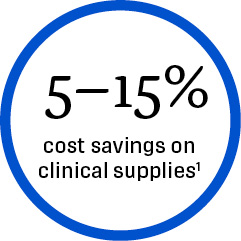
That secondary responsibility carries serious financial impact for health systems facing increasing cost pressures. According to McKinsey, optimizing spend on clinical supplies can yield five to 15 percent cost savings.1
Hospitals overspend an estimated $25.7 billion annually on supply chain inefficiencies, and procedural areas like the cath lab, OR, and interventional radiology suite account for a disproportionate share of that waste. The challenge is that each of these environments presents a distinct set of inventory hurdles—and most health systems are still managing them in silos.
The cath lab: High stakes, limited bandwidth
In the cath lab, routine commodities—gloves, gowns, basic disposables—typically flow through the hospital’s enterprise supply chain without issue. The real complexity lies in physician preference items (PPIs): the catheters, stents, balloons and guidewires specific to individual physicians and procedures. These are high-dollar items that are often ordered directly from the manufacturer, which means the hospital may be absorbing shipping costs, rush freight charges and long lead times.
Because clinical staff are the ones placing these orders, purchasing can be reactive rather than strategic.
“You may have clinicians who were busy and didn’t have a chance to get to the ordering on Monday,” says Morgan. “Then they had a big caseload on Tuesday, and now it’s Wednesday and they have to rush things in.”
The result is a cycle of over-ordering and under-ordering, compounded by the fact that cath labs are often not plugged into the hospital’s enterprise-level supply chain processes. And in the electrophysiology (EP) lab, teams may miss significant savings opportunities by defaulting to OEM products when reprocessed alternatives are available, simply because it’s quicker.
Morgan’s advice: to the extent possible, assign a dedicated or partial FTE to manage ordering. And connect to the central supply chain team to see what processes may help ease the burden.
“Then they can be really thoughtful about looking at the schedule, looking ahead, and rotating the inventory,” she says. “They’re more strategic with it because it’s part of their role.”
Optimizing the operating room
The OR shares many of the cath lab’s challenges but adds layers of complexity. Chief among them is a common concern born out of wanting to be prepared.
“They may only actually need an item 10% of the time, but they’re not going to get caught short,” Morgan says. “So they over-index on having product available.”
That over-indexing can create costly churn: products expire on shelves, returns mount, and capital sits tied up in inventory that may never be used.
Then there’s the issue of undocumented inventory. Nurses sometimes may sequester some important items to keep a closer eye on inventory.
“There’s no ill intent, it’s the opposite,” says Morgan. “They’re trying to make sure supplies are available.”
However, these shadow stockpiles make accurate inventory tracking challenging and can distort purchasing data.
Perhaps most critically, the OR’s supply chain is really three supply chains in one—commodities flowing through central supply chain, custom procedural kits from a kit provider, and individual preference card items sourced separately.
Health systems that learn to view them as a single, continuous flow—rebalancing what belongs in the kit, what stays on the shelf, and what flows through distribution—can discover greater efficiency.

Interventional radiology: Where variability meets volume
The IR suite shares DNA with both the cath lab and the OR but brings its own distinct inventory challenges. Like the cath lab, IR depends heavily on high-cost disposables: catheters, microwires, stents, embolics and ablation probes. But unlike the cath lab’s relatively narrow cardiac focus, IR covers the entire vascular tree and beyond, which means the inventory is correspondingly deeper and harder to standardize.
Research published in the Journal of Vascular and Interventional Radiology underscores the cost implications.2 A two-year study analyzing more than 44,000 expendable items across 2,121 IR procedures performed by interventional radiologists at an academic hospital found that physician device preference alone drove cost variation as high as 56.6% for certain procedures like radioembolization. The study concluded that “Physicians vary in their item selection even for standard procedures…. [T]hese findings suggest that standardization may offer an opportunity for cost savings.”
The standardization paradox
Standardization is often held up as the gold standard for procedural supply management. But Morgan offers an important nuance: When standardization across a health system isn’t done strategically, it can actually introduce inefficiency.
Consider the scenario where three hospitals in a network try to align on a single total knee replacement kit. If surgeons can’t agree on components, the system defaults to the lowest common denominator—and everything else gets pulled out of the kit and back onto the shelf.
“All of that cost just shifted over to their shelf, and all the labor just shifted over to their shelf,” Morgan explains.
Morgan calls the better approach “strategic standardization”: starting at the component level within individual kits, then building outward only where true alignment exists. Kits, she argues, need to be “a living, breathing reflection of current supply needs,” requiring regular review and a close relationship with the kit provider.
Technology as the connective tissue
Bridging these procedural silos requires technology that can unify preference card management with kit design and enterprise supply chain data. Medline’s PrefConnect platform and MedPack kit management system do exactly that—and uniquely in the industry, they talk to each other. That integration allows health systems to see the full picture: what’s on the preference card, what’s in the kit, and what’s on the shelf, all in one connected view.
Morgan sees this as the foundation for the next frontier: connecting supply utilization data with clinical outcomes.
“Different doctors may have different items they prefer,” says Morgan. “That’s where the conversation happens. Sometimes an item is more affordable, and the clinical outcomes are the same or even better. We all know items like implants or PPE impact clinical outcomes, but hospitals are beginning to recognize that supply utilization in their kits also impact outcomes.”
Morgan also predicts greater hospital specialization within health systems—concentrating certain procedures at certain facilities—which could accelerate standardization by reducing the number of competing preferences in any single department.
For supply chain professionals, the message is clear: procedural areas like the cath lab, OR, and IR suite aren’t just clinical spaces—they’re supply chain ecosystems with distinct dynamics that demand dedicated attention, strategic partnerships, and a willingness to look beyond the conventional playbook.