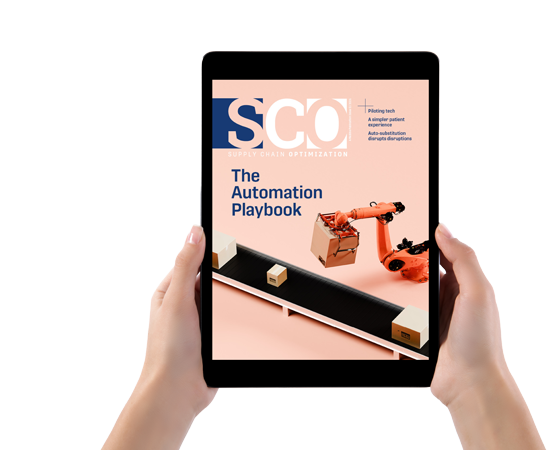
Piloting into the Future
How Medline and one health system are testing the next generation of supply chain technology
What does a fully integrated supply chain look like?
Depending on who’s asking and when, the answer can differ greatly. But at a basic level, it means each key link in the supply chain—manufacturers, distributors and providers—are coordinated and connected to function as a unified whole.
While it sounds simple when defined that way, an integrated supply chain has proved to be a philosopher’s stone for the healthcare supply chain: something a bit legendary and transformative, but just out of reach.
That’s why Medline began working with the vice president of supply chain at a $3 billion health system in Ohio on a new pilot program. The VP knew it wouldn’t be one sweeping reform that created an integrated supply chain. It would take a series of process improvements, partnerships and pilot programs to get there.
The system serves communities across multiple states, which can bring increasing complexity to supply chain management. Manual inventory checks, inconsistent PAR levels, and labor-intensive ordering processes can create inefficiencies that strain resources and risk stockouts—issues that can lead to market disruption.
A vision for integration
At the beginning of 2025, knowing he wanted to fully integrate his supply chain across all of his facilities, the VP launched a pilot at a surgery center in Ohio, partnering with Medline as the system’s medical-surgical distribution partner.
The pilot tackled integration on a number of fronts, including doing a full inventory review, exploring new technology options, redesigning storage spaces, and implementing the latest approaches to supply chain optimization. That’s all built on a foundation of the work the health system and Medline have already done together.
“The goals were to standardize processes, improve service quality, reduce stockouts and increase labor productivity,” said Michael Novak, Medline regional director of supply chain optimization. “The end result is to help everyone do their most impactful work.”
Technology as an enabler
From the beginning, the health system has been a forward-thinking partner with Medline when it comes to implementing technology solutions. Ryan Rutledge, Medline’s division sales director, refers to them as “super users” of Medline’s Mpower Foundations™ predictive analytics platform. Through the use of Foundations, the system’s supply chain team can identify the risk of high-priority SKUs, the availability of substitutions, and plan ahead to mitigate backorders.
“They’ve really been proactive using analytics to resolve any backorders, and then leveraging AutoSub,” said Rutledge. AutoSub is Medline’s advanced risk mitigation solution that connects directly with a provider’s EDI to automatically substitute products that have been previously approved by the provider. “Orders are being placed every day, so there’s continuous motion, and it’s about making it as efficient and seamless as possible.”
With the system’s supply chain team being one of the most advanced users of Mpower Foundations in the country, it opened the door to exploring more technology to help drive efficiency. Together, Medline and the VP piloted a vision inventory management system that deployed cameras in stock rooms. The cameras feed into artificial intelligence software, which scans the room to assess inventory levels. As nurses retrieve supplies from bins, the vision system captures real-time inventory data and triggers replenishment alerts if reorder points are reached.
“The thought is if I have a camera in the room, I don’t need to send a human to that room to scan a bin or place an order,” said Novak. “I can leverage these cameras to feed data to someone sitting remotely, and they can literally place orders remotely on the images that they’re getting.”
Together, Medline and the VP have also worked to implement electronic shelf labels (ESLs) to help automate updates and reduce manual processes. The system is also piloting a larger version of the ESL, which they’ve hung in supply rooms to help facilitate important supply chain messaging to frontline nursing staff. The system provides real-time updates, getting information to anyone who needs it, when they need it.
“They operationalized iPad-sized ESLs and hung them in each of their supply rooms,” said Novak. “It’s like a digital white board that they’re using so supply chain can transmit important messaging to the nurses.”
Beyond technology
An integrated supply chain means more than just new technology. They also leveraged a time-proven method, putting into place a two-bin kanban system, and conducted a lot of PAR optimization work to ensure inventory replenishment ran efficiently. Everything works together: people, process and technology.
“It’s a partnership where, yes, technology has a significant role in it, but it’s about much more than that,” said Rutledge. “They’re leaning on us to do what we’re great at—push work upstream to make them more efficient downstream.”
The team continues to explore ways to work together, including partnering on an emergency preparedness plan that would keep operations moving in the event of a disruption.
The results: Greater efficiency, improved resilience
Supply chain technology can be game changing when implemented correctly, and a roadblock when not. Systems that don’t align can cause as many problems as they solve. That’s why this partnership has been such a success: As Medline and the health system’s VP push the limits and explore new opportunities, they’re both testing what works and what doesn’t. It means both provider and supplier can work together on finding the best path forward and building greater resilience.