Keeping Up with the Latest in Lab
Gain ideas from other lab leaders to implement at your facility.
How are clinical lab leaders addressing critical industry challenges? Through conversations with lab leaders across the country last year, we were able to glean important insights into how they’re operating. From overcoming staff shortages to keeping up with medical lab technology, lab leaders had a lot to talk about. It’s no wonder—the US lab market is valued at $85 billion.1
So what were the primary insights? And how are lab leaders tackling their most pressing issues? Let’s start by examining the four problem/solution themes that surfaced.
1
Problem: Staff shortages in the lab due to continuous decline in career interest
“In this market, you have to be the best place to work. There aren’t enough people to go around.”
Solutions lab leaders are trying
- Automation via third-party implementation to reduce administrative burden
- Communication and collaboration to ensure all team members have a voice
- Anonymous surveys to provide input
- Creation of an MLS intern program
- Partnering with academic institutions to provide clinical experience for future laboratorians
- Employee engagement team that provides activities to reduce burnout and increase wellness
2
Problem: Lab staff is consistently searching for ways to optimize processes to keep up with demand
“The biggest waste of time in lab is poor collaboration with nursing, cancelling tests and having them reorder those tests.”
Solutions lab leaders are trying
- LUM deliveries
- Creating more efficient specimen workflow
- Automatic temperature monitoring
- Phone trees to triage calls
- Automation
- Swab consolidation
- Roombas for cleaning
- Consolidating tests and/or locations
- Workspace environment renovations to keep staff happy/provide flexibility (standing desks)
Why medical lab technology is so important
Risks of manual processes
- LUM deliveries
- Creating more efficient specimen workflow
- Automatic temperature monitoring
- Phone trees to triage calls
- Automation
- Swab consolidation
- Roombas for cleaning
- Consolidating tests and/or locations
- Workspace environment renovations to keep staff happy/provide flexibility (standing desks)
Laboratory areas in need of automation
- Histology
- Anatomical pathology
- Feeder for digitalized slides
- PCR
Innovation ideas should come from the vendor
- Molecular panels
- Fluids testing
- Automated mass spec testing
“We’re pushing education with our current staff to be ASCP certified. We want them to have what they need to pass the exam so they can provide better care for patients.”
3
Problem: Hospital executives don’t understand the value that lab brings
“We need to show how we influence everything around us: surgery, outcomes and patient satisfaction.”
Solutions lab leaders are trying
- Leading projects that span departments (PPID, consolidation)
- Meeting and creating positive relationships with other departments
- Hiring data analysts to create meaning from numbers
- Keeping their seat at the table to consistently communicate/share the work lab is doing
- Outreach programs and expansion
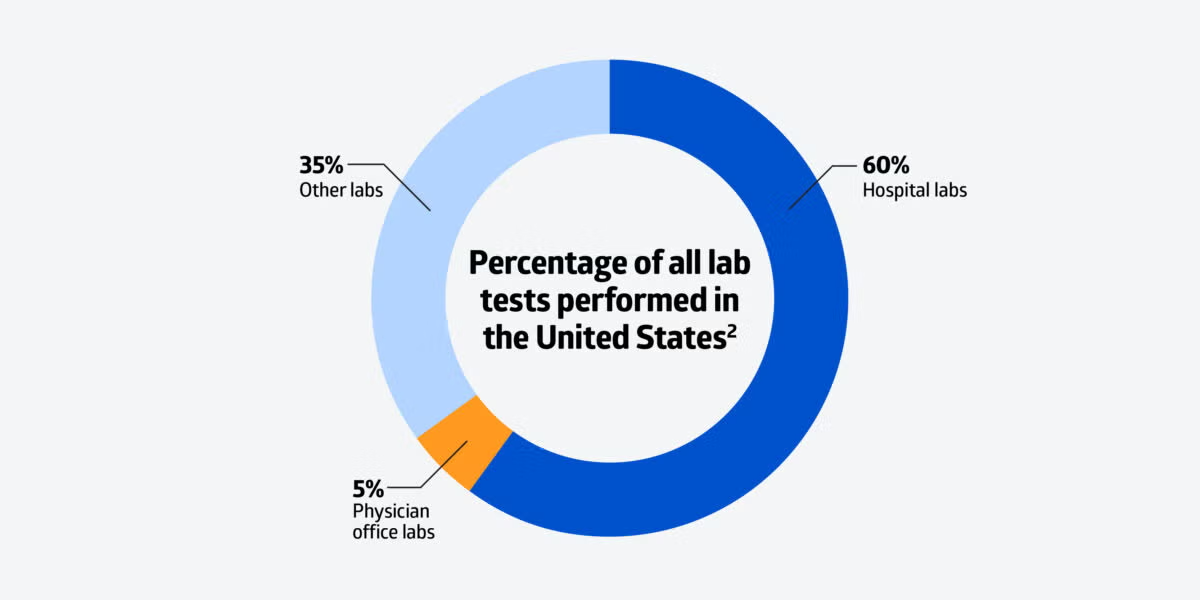
In the US, around 14 billion clinical lab tests are performed annually, making them the most used medical benefits. In clinical laboratories, more than 30% of lab tests are specialty lab tests.3
4
Problem: Trying to stay up to date with everchanging medical lab technology for better patient experience and outcomes
“What steps can we take to break away from conventional thinking?”
Solutions lab leaders are trying
- Looking to vendor partners for outside-the-box thinking specific to a given facility
- Cost analysis for automation per test/per employee, to justify for budgeting
- Focus on educating staff to work at the top of their license
- Analyzers and automation line (focus on histology, PCR and mass spec)
“We’ve expanded career development pathways to reduce the burden on leaders. For example, staff go to school to become experts on analyzers.”
What are the key takeaways?
Lab leaders know that 70% of healthcare decisions depend on laboratory test results,4 and they are passionate about what they do.
- They deeply care about their staff’s needs and potential
- Keeping up with the latest technology is challenging, and they rely on their pathologists, physicians and vendors to help
- Data is the currency of healthcare, and some labs hire FTEs to help manage and digest that data. When you don’t own your lab, you don’t own your data—somebody else does.
- Lab benefits when they leverage other departments (for example, working with nurses on standardizing COVID swabs)
- There is a continuous focus on improving operational efficiencies
- Lab leaders want transparency and communication from their vendor partners
Do these themes and takeaways resonate with you and your team? Have you tried any of the solutions mentioned? Even with disruptors such as evolving care models, evolving payment models and increasing patient involvement, it’s clear that optimizing people, process and technology remain key to success. Your vendor partner can help you get there.