CSCs Make Room for Resiliency
How IDNs and hospital systems are creating more resilient supply chains.
One of the primary challenges in the healthcare supply chain is the complexity and diversity of medical supplies, ranging from pharmaceuticals and medical devices to personal protective equipment (PPE) and consumables. Managing these products, each with unique storage, handling, and distribution requirements, can be a daunting task.
We have seen firsthand how disruptions, such as natural disasters, pandemics, or geopolitical events, have led to shortages of critical supplies. These shortages can have severe consequences, including delayed or postponed procedures, compromised patient safety, and increased costs due to the need to source alternative supplies or stockpile inventory.
Moreover, the healthcare industry is under constant pressure to reduce costs while maintaining high-quality standards, which can strain supply chain operations. Inefficiencies in inventory management, distribution, and logistics can result in excess inventory, waste, and higher operational expenses, ultimately impacting the bottom line and the ability to provide affordable healthcare services.
Resilient and efficient supply chains are still essential post-pandemic. Prioritizing supply chain resilience and efficiency helps businesses adapt to disruptions, meet customer expectations, stay competitive, manage risks, and comply with regulations in today’s interconnected and dynamic business environment. Supplier partners such as Medline have helped their customers find this resiliency through customized space planning solutions, such as consolidated service centers (CSCs). CSCs are being adopted by IDNs (integrated delivery networks) and hospital systems to address supply chain vulnerabilities and improve resilience.
What is driving systems to consider establish consolidated service centers?
Peter Saviola, vice president of supply chain optimization at Medline, outlines four key reasons why hospital systems are making the move toward incorporating CSCs into their overall supply chain operational investment:
Resiliency. Clearly, coming out of the pandemic, hospitals and IDNs are looking for the ability to add resiliency to the supply chain—resiliency that they can control. This means that they have their own pile of inventory and their own space to operate, creating self-directed and self-controlled resiliency.
Efficiency. Everyone wants to reduce the reliance on labor, minimizing touch points and complexity at the point of care. Labor within healthcare is stressed, with most systems and care centers struggling to get physicians and clinicians the things they need for patient care. The support components—materials management, EVS, clinical services, lab services, information technology staff and processes—all involve labor and space costs. A service center is a spot to land those services and aggregate those costs.
Simplicity. Increasingly, there is a focus on making the supply chain at the end user sites simpler and cleaner. To fill a supply order to a med surg unit, there is often a multitude of suppliers and, depending on how many of those supplies go through a primary distributor, the processes can be disparate and traditionally inefficient. There are often too many transactions and the need for labor to support all the processes, adding cost and complexity to the supply chain. The more a system can force supply chain operations through a single source of supply, like dedicated warehousing and CSCs—getting all support services from a service center—the more efficient the end user supply chain becomes.
Economics. A CSC is dedicated warehousing and more for a given system, doing predominantly low unit measure deliveries to member facilities for regulated distributed items, manufacturer-direct items, and maybe some complimentary services like IT, imaging, clinical engineering, equipment repair, and biomed equipment repair. Those might be aggregated into a facility like this, whereas without a CSC a system typically couldn’t justify those costs. Healthcare systems that have service centers essentially have dedicated distribution centers. Medline has the distinction of being one of the only vendor partners in industry that has true med surg distribution, along with the manufacturing arm. This breadth of integration supports any one of the CSC models that are in operation right now.
The case for consolidated service centers
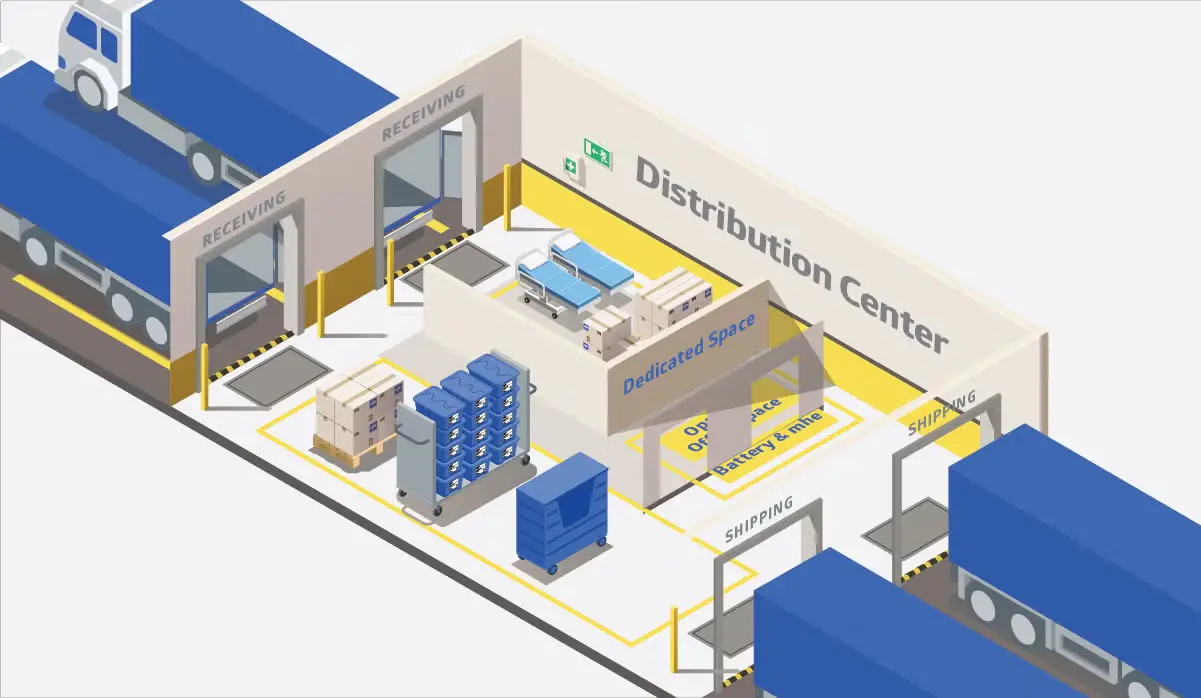
The concept of a CSC involves streamlining and centralizing operations such as procurement, inventory management, distribution, and logistics for healthcare providers—including hospitals and clinics—often through the building and management of a system’s own dedicated warehousing space. After all, when you think about it, the cost per square foot for hospital space is considerably more valuable—so if a system can move ancillary supplies and items to an offsite warehouse, they can free up more space for patient care. It’s a win-win for everyone involved.
“There are often too many transactions and the need for labor to support all the processes, adding cost and complexity to the supply chain. The more a system can force supply chain operations through a single source of supply, like dedicated warehousing and CSCs—getting all support services from a service center—the more efficient the end user supply chain becomes.”
Peter Saviola
Vice president of supply chain optimization, Medline

CSC implementation considerations
-
- Initial investment:Setting up a CSC requires initial investment in infrastructure, technology, and staff training.
- Change management: Transitioning to a centralized model involves changes in processes and workflows, requiring effective change management strategies to ensure buy-in from all stakeholders.
- Technology integration:Successful implementation of a CSC depends on integrating advanced technology systems for inventory management, procurement, and data analytics.
- Scalability:The CSC should be designed with scalability in mind to accommodate future growth and evolving needs of the healthcare system.
Ultimately, a consolidated service center in the healthcare supply chain space is a strategic approach to centralize and streamline supply chain operations, leading to improved clinical, financial and operational outcomes. Find out how Medline’s SCO team can help.
When we think about the key features and functions of a CSC, there are many aspects to consider:
- Space procurement: Vendor suppliers can offer consultation through real estate and construction professionals to locate existing warehouse spaces or land for build that precisely meets the needs of the healthcare system.
- Design and installation: Supply chain experts design a CSC customized to a system’s workflow, and certified project managers ensure a smooth, cost-effective build. Cost benefits come in with preferred pricing to help reduce spending on racking, material handling equipment (MHE) and other warehouse materials.
- Distribution and transportation logistics: The CSC consolidates the distribution of supplies to various hospitals, physician offices, surgery centers, clinics, etc. that are operated by a particular health system. By optimizing delivery routes and schedules, and Medline’s fleet of 2,000 trucks, the CSC can reduce transportation costs and ensure timely delivery of critical supplies.
- Staffing and labor management: This can be a game changer. A CSC can manage daily workforce operations for labor continuity and productivity.
Efficient operations and inventory management: Some key measures of successful integration include:- Technology: Warehouse operations can be run on Medline’s systems (ERP, WMS) or the healthcare system’s
- KPI reporting: Daily and weekly reporting ensures operating efficiency
- High fill rates: Safety stock management delivers best-in-class fill rates
How is Medline customizing CSCs for its customers to help supply resiliency?
UW Health: Reassessing medical supply storage plans during the pandemic
CHALLENGE
Outfitting a warehouse to serve all points of care for the UW Health system during the pandemic and beyond.
ACTION
Medline and UW Health identified a building as a suitable location for their CSC, and made a formal 3PL agreement for additional storage.
RESULT
An efficient warehouse and standardized formulary that helped improve patient care.
UW Health aimed to quickly equip their new consolidated service center pre-pandemic, but COVID-19 caused numerous setbacks. Amidst the ongoing supply chain disruptions, a distribution center that minimized future supply shortages and interruptions in patient care was crucial. To find a suitable space that met their needs, UW Health sought a reliable partner. Together, Medline and UW Health identified a building previously used for COVID testing as a suitable location for their consolidated service center, now known as the John Walls Support Services Center (JWSSC). As the warehouse completion neared, the partners began exploring opportunities to enhance supply chain and distribution efficiency.
In addition, UW Health made a 3PL agreement with Medline, allowing them to store additional supplies, ensuring a smoother supply chain. The JWSSC has been running efficiently since January 2023, serving everywhere care is delivered with a focus on efficiency. The organization has utilized every available inch of storage space for medical supplies. Furthermore, the 3PL agreement with Medline enables UW Health to plan for potential supply chain challenges in the future through bulk purchasing and stockpiling.
“If we had done all of this on our own, [the CSC] would not have been optimized for supply chain efficiencies.”
Steve Mumm
Senior project manager for planning, design and construction, JWSSC, UW Health
AdventHealth: New facility leverages technology to enhance supply and resiliency strategy
CHALLENGE
Impacts of supply chain disruption from COVID-19 inspired the system to embark on a solution to ensure supply chain resiliency.
ACTION
Through a multi-faceted partnership, AdventHealth and Medline leveraged each organization’s strengths to allow the system to own its inventory and distribution strategy and create a CSC structure to accommodate future growth.
RESULT
The partnership co-developed a 300,000 sq ft CSC in a larger 550,000 sq ft facility (where AdventHealth has room to expand)—with supplies for AdventHealth’s hospitals and care sites throughout Florida to ensure product availability for patient care. The organizations will co-operate the distribution center using a blended staffing model.
“When AdventHealth recognized the importance of building our own distribution center as part of our resiliency plan following the COVID-19 pandemic, we also considered having a partner at the table. Medline emerged as the clear choice.”
Marisa Farabaugh
Chief supply chain officer, AdventHealth
Ensuring that healthcare supplies reach the right place at the right time is a complex yet critical task that often goes unnoticed by the public. The CSC, which recently became operational after just a year from design to construction, exemplifies the benefits of a centralized approach to supply chain management. This nearly 375,000-square-foot facility in Florida not only enhances the efficiency of inventory management but also ensures that caregivers have the necessary tools to provide optimal patient care. It includes a distribution center, print shop, courier and mail services, mail order pharmacy that serves more than 125,000 patients, and meeting spaces and offices to accommodate 250 team members. Like other AdventHealth workplaces, the CSC was built with the wellbeing of team members in mind. A temperature-controlled warehouse, onsite chapel, wellness area with educational opportunities and space to relax, and a café with healthy grab-and-go meals are all meant to help team members connect, learn, and recharge during their down time.
The CSC is a testament to the power of strategic partnerships in strengthening supply chain resilience. Co-developed by AdventHealth and Medline, this multiuse building represents a collaborative effort to bolster the healthcare supply chain. The facility is designed to serve AdventHealth’s hospitals across Florida, continuously adding new inventory to meet the growing demands. It highlights the positive impact of this innovative distribution center on healthcare delivery.
“The collaboration between our two organizations has allowed both to maximize our respective strengths and expertise in patient care and supply chain management. Additionally, AdventHealth has been able to enhance our own resiliency through access to an expanded distribution network. All of this has been accomplished while staying true to our organization’s culture.”
Doug Pytlinski
Senior vice president of system supply chain, AdventHealth
Future outlook and trends for CSCs
As healthcare providers recognize the cost savings and efficiency improvements they offer, there is an increasing trend for systems to adopt the idea of a consolidated service center or dedicated warehousing space. This growth is driven by the need to optimize supply chain operations, reduce costs, and improve patient care. Systems can gain more and more control over transportation, labor, automation, technology and forecasting, which helps them have more visibility across their broader supply chain network. Medline has a proven methodology for building these CSCs with its customers because of the following:
- Forming strategic alliances to enhance supply chain efficiency and resilience. These collaborations can lead to shared resources, better negotiation power, and improved service levels.
- Adopting shared services models where multiple healthcare providers within a system use a common CSC to manage their supply chains. This model helps in reducing costs and optimizing resource utilization.
- Integrating advanced technological systems ensures the seamless operation of CSCs.
- Offering expertise in supply chain infrastructure and operations, so that a system can focus on providing excellent care.
Key takeaway
The future of consolidated service centers in the healthcare supply chain space is marked by increasing adoption, advanced technology integration, and strategic collaborations—as systems seek to take more and more control over their inventory management and logistics. These trends and considerations will shape the evolution and success of CSCs in enhancing healthcare supply chain efficiency and patient care. It’s only a matter of time before these partnerships become more and more commonplace, as vendors move from the transactional to the strategic. In the end, it’s more than just space; it’s a whole new way of operating.