Women in Supply Chain Pay It Forward
Healthcare profits from diverse perspectives and leadership
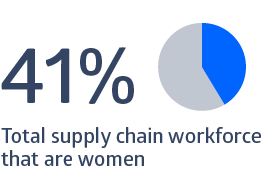
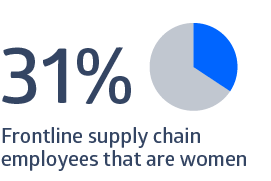
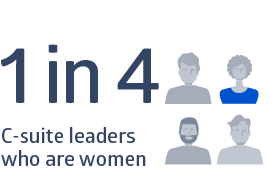
In 2023, women made strides in the supply chain workforce, with notable gains at the C-suite and executive levels, according to Gartner’s annual Women in Supply Chain Survey.1 The survey found that 26% of these roles are now held by women, an all-time high and up from 19% in the previous year. Additionally, the survey showed that women now make up 41% of the total supply chain workforce, approaching the 47% representation of women in the overall US workforce. However, frontline representation still lags, with women filling just 31% of these roles.
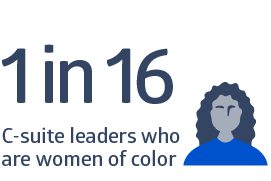
This year’s research reveals some hard-fought gains at the top, with women’s representation in the C-suite at the highest it has ever been. According to McKinsey & Co’s 2023 Women in the Workplace 2023 report,2 women represent roughly one in four C-suite leaders, and women of color just one in 16. Does this mean that supply chain is ahead of the trend? And yet, with lagging progress in the middle of the pipeline—and a persistent underrepresentation of women of color—true parity remains painfully out of reach.
In speaking with several women supply chain leaders in healthcare systems across the country—Régine Villain, SVP, Chief Supply Chain & Support Services Officer at Ochsner Health; Sarah Charai, Executive Director, Supply Chain Operations at Cleveland Clinic; Jennifer Carlson, VP of Supply Chain at Boston Medical Center; and Candice Pytlik, Vice President Strategic Sourcing and P2P at Henry Ford Health—several major themes emerged on the state of women in supply chain leaders, their ability to impact change on all levels and how healthcare is focused on facing challenges head on.
Diversity impacts decision making and improves outcomes
More and more, women are making their mark by being visible and active in the advancement of female leaders. People bring different skills, perspectives, approaches to the process—based on background, history, experience. As Sarah Charai relates, the more perspectives you have, the more creative and innovative the outcome or solution. Organizations, groups and programs focused on the advancement of women and BIPOC employees bring an amazing amount of value. We know that women still aren’t represented equally in leadership roles, and we still have a gender gap. It’s the awareness of this and an organization’s commitment to address it that is going to drive change.
“There’s a real feeling of paying it forward to others. The increased visibility of women leaders is encouraging, and seeing that representation across gender and race is key.”
Sarah Charai
Executive Director, Supply Chain Operations at Cleveland Clinic
Benefits of diversity in decision making
- Increased innovation: Research, such as studies published in the “Harvard Business Review,”3 has shown that diverse teams are more likely to generate innovative solutions and ideas compared to homogenous groups.
- Enhanced problem-solving: A study published in the “Journal of Personality and Social Psychology”4 found that diverse groups outperformed homogenous groups in solving complex problems, emphasizing the importance of cognitive diversity.
- Improved financial performance: Research by McKinsey & Company, Catalyst,5 and other organizations has consistently shown a positive correlation between diversity in leadership and financial performance. Companies with more diverse leadership teams tend to outperform their less diverse counterparts.
- Enhanced creativity and out-of-the-box thinking: Multiple studies have found that culturally diverse teams are more creative.6
- Increased customer understanding: Research by Harvard Business Review7 emphasizes that inclusive leadership is emerging as a unique and critical capability helping organisations adapt to diverse customers, markets, and ideas.
Value analysis is integral to supply chain success
As organizations strive for greater efficiency and cost-effectiveness in the delivery of healthcare services, women in supply chain are finding themselves at the forefront of decision-making processes. The emphasis on value analysis underscores the importance of strategic procurement, innovative sourcing, and the careful evaluation of products and services to optimize both quality and cost. Women professionals in this field are driving change by leveraging their expertise in supply chain management to navigate the complexities of healthcare procurement, negotiate advantageous contracts, and ensure the delivery of high-quality products while maximizing value for healthcare organizations. And there is an underlying sentiment that women are uniquely adept at handling diverse perspectives from clinicians and supply chain managers. This shift towards value-driven decision-making not only empowers women in healthcare supply chain roles but also contributes to the overall resilience and sustainability of the healthcare system.
Candice Pytlik recalls that with the pandemic and so many other critical issues to focus on, a lot of things went by the wayside—including the value analysis teams. Over the past year, Henry Ford Health has made great strides to restart those teams and with that has come increased engagement and involvement.
“It’s no longer as simple as price reductions. We must get more creative, more innovative. We must look at clinical outcomes, and we need to look at the processes. We must look at the waste and the utilization standardization. It’s about stepping outside of our traditional supply chain world and then interacting with stakeholders to find opportunities to drive value.”

Candice Pytlik
Vice President Strategic Sourcing and P2P at Henry Ford Health
As Jennifer Carlson of Boston Medical notes, value analysis is not a core competency in most supply chains yet. But this is a direction many systems are trying to go. Value analysis leaders are the ones working with often chief medical officers, chief nurse officers, clinicians, supply chain leaders and executives to forge a pathway and a partnership to collaborate on patient care, improved safety and better outcomes.
Clinical integration and patient-centered care is paving the way
Despite the number of female medical school graduates hovering around 50%, the percentage of women in leadership positions in organized medicine and academia has remained consistently low. For instance, a 2021 study found that only 13% of hospital system leaders, 14% of chief medical officers, and 27% of chief executive officers were female.9
But in the eyes of many women supply chain leaders, the rising presence overall of women as clinicians—if not quite yet in leadership roles—has substantial implications for clinical and supply chain integration. Doors are opening for women to assume leadership roles, as their skills and perspectives align with the evolving landscape of patient-centered, integrated care. Efforts to promote gender diversity and inclusivity within both clinical and supply chain leadership will be crucial for fostering a more equitable and effective healthcare system.
Jennifer Carlson recalls that historically, when people would refer to supply chain, the focus was very logistics centered: purchase something, put it on the shelf, and that was that. There wasn’t a lot of additional input from clinical stakeholders. Before the pandemic, the investment was in high standardization with the lowest variation. But clinical involvement has shifted and increased, and, as a result, she believes there has been more women coming into supply chain. Although, it’s not clear that everyone has adopted a clinically integrated supply chain—especially in the smaller systems—that is the trend in the industry, where clinical engagement, integration opportunities, and utilization reviews are changing the way decisions are made.
Women clinicians bring diverse perspectives and often emphasize patient-centered care. This focus on understanding patient needs and preferences directly influences clinical integration efforts, aligning them with a more holistic and patient-centric approach. Régine Villain from Ochsner has a vision to really empower a resilient, patient-centric healthcare ecosystem. She sees herself and other supply chain leaders as facilitators at the intersection of everything that happens in healthcare—creating a more automated, connected and sustainable supply chain organization.
You’re more valuable to the organization than this job you applied for
Jennifer Carlson recounts a story that she has never forgotten. After she graduated from college, she started applying for jobs. One day she met with an HR hiring manager who was interviewing her for a job she had applied for, and he said, “You know, I think this job isn’t the right job for you. It’s kind of a dead end. There’s nowhere to go from here, and I think you have more. You’re more valuable to the organization than this job you applied for. So let me work with you and see if we can find a better fit. You know something that might have a growth pathway.” She says that she never forgot that and has never met anyone else during her career that has done or said something like that.
“I think if your leadership team is all men. You need to stop and ask yourself why, and why you haven’t attracted more women. After all, there are a lot of qualified women out there now in this field, so there’s really no reason not to have some diversity in your leadership team.”

Jennifer Carlson
VP of Supply Chain at Boston Medical Center
It really depends on the organizational culture, and that comes from the top down. As Pytlik believes, you really need that C-suite level to want to support the inclusion for women and diversity. Because if top leadership doesn’t believe in it, it really isn’t going to make a difference. She, like many others, have felt in the past that the only option was to leave a company and move somewhere different, for more open doors and for better opportunities.
Organizations are increasingly turning to internal mentoring programs—with ERGs and other initiatives—to provide opportunities for people to interact with other women leaders in various positions. But these mentorship program must open to people in leadership positions, as well as frontline employees. Focusing primarily on management level or salary level employees does a disservice to the organization.
Sarah Charai of Cleveland Clinic works on the operations side of supply chain right now—specifically in materials management. This has historically been a very male dominated part of the supply chain business. She feels that she has a large responsibility to pay it forward and to encourage women on her team and the women she comes across who are interested in supply chain or in healthcare. She spends time being a mentor and encouraging networking, making herself available to answer questions, engage in discussion and lend support.
“Well, you know, we haven’t always had a seat at the table, right? Which means we haven’t always had a voice. Based on that experience, women are very sensitive to the need to be inclusive. And they’re very aware about ensuring everyone’s involved, that everyone finally has that voice.”

Sarah Charai
Executive Director, Supply Chain Operations at Cleveland Clinic
Healthcare as a mission
There seems to be the notion—whether you can prove it or not—that women clinicians frequently advocate for more “comprehensive” healthcare solutions that go beyond traditional medical interventions. This broader perspective can influence clinical integration efforts by considering social determinants of health and promoting a more holistic view of patient well-being. With the increased visibility of women in clinical roles may prompt a broader examination of gender disparities within healthcare supply chains. Women clinicians—turned leaders—may advocate for gender diversity and equity in supply chain leadership, potentially influencing organizational policies and practices.
Carlson has seen firsthand that healthcare systems—often nonprofit systems—don’t always run with the most efficiency. They manage their businesses sometimes more from a place of heart. But she sees this as a huge opportunity to really drive more business rigor into the processes. As she puts it “If there’s no margin, there’s no mission.” It comes down to giving care that’s affordable, which means looking at the total healthcare and supply chain network.

Transparency and innovation come through collaboration
In unison, all four leaders talked about collaboration as critical to success with internal stakeholders and external partners. Pytlik finds that if she is upfront and honest with her supply base about her challenges, suppliers aren’t afraid to come forward with creative or innovative solutions, because they know she’s going to listen and be open to hearing them and even potentially trialing with them. She also believes that innovation is probably one of the largest things she looks for. How is a partner innovating? How are they bringing new ideas to the marketplace. It’s not just about the products. They have process improvement arms and consulting arms that look at your operations and provide ideas on how you can better yourself as an organization.
Carlson says that the vendors she has gravitated to the most are willing to take risks and do something a little outside the norm. To get to that, though you also must demonstrate that a level of knowledge and expertise and can also influence others in your own organization.
Villain recounts the number of stakeholders—the customers within supply chain, and then outside—and when she thinks about fostering that collaboration, she believes it starts with communication: encouraging collaboration amongst all the stakeholders to truly drive collective innovations and progress. And you cannot foster collaboration without transparency and trust. She says, “When we’re challenging each other. We’re promoting trust.”
“I see the future of supply chain as the efficient distribution of medical innovations, not supplies. Because we tend to talk about supply chain and then only assume ‘supply’ with that. I want us to elevate the conversation. In the end, it’s really an intelligent and efficient distribution of medical innovations and resources.”

Régine Villain
SVP, Chief Supply Chain & Support Services Officer at Ochsner Health
The shape of things to come
The future of healthcare requires all parties to be agile and able to meet the demands of customers, as well as the demands of each other. And there is more emphasis on data to identify trends and patterns. Enabling a data driven organization will soon become the primary way to optimize a supply chain operation. And yes, AI and predictive analytics is part of that equation.
When Villain thinks about supply chain, some of the questions are plain:
- How can I prepare for future demands?
- How can I prepare for the advent of reducing waste?
- How can I prepare to ensure that supplies are available when and where they’re needed at the right price?
This is where a collaborative and trusted partnership really comes into account. Where everyone can get to a point where healthcare supply chain matches where manufacturing supply chain is already—forecasting demand for medical supplies, medications, equipment, etc., and optimizing inventory levels, while reducing cost in other areas. This is also where sustainability and a focus on waste has also become an area of focus,
As Villain concludes, “I believe that the healthcare supply chain can play a very critical role in promoting sustainability, reducing the environmental impact and footprint and making sure that we’re establishing grid practices now.” It’s clear that all leaders are on a journey with that.
Key takeaway
Armed with a diverse set of skills, including strategic thinking, adaptability, and collaborative prowess, these leaders have demonstrated resilience in the face of evolving challenges. As the healthcare industry continues to undergo transformative changes driven by technological advancements, global events, and an increased focus on value-based care, women leaders in supply chain roles are not merely prepared; they are catalysts for innovation and positive change. Their ability to foster inclusive cultures, leverage data-driven insights, and advocate for sustainable and efficient supply chain practices positions them as instrumental contributors to the resilience and success of healthcare organizations in the years to come. Through their visionary leadership, women in healthcare supply chain roles are not just navigating the future—they are actively shaping it.